Elevating Community Voices in Maryland’s Coastal Climate Policy
Partner: The Nature Conservancy – Maryland Chapter
The Challenge
Maryland’s coastal communities are already experiencing the accelerating impacts of climate change—chronic flooding, stressed infrastructure, declining public health, and growing economic pressures. Yet these frontline communities often have limited influence over the state and local policies that shape their resilience.
The Nature Conservancy (TNC) – Maryland Chapter engaged Equnival Partners to design a process that would:
Build meaningful, trust-based relationships between communities and policy actors.
Create a dedicated space for listening, learning, and sharing local expertise.
Identify policy solutions that reflect the lived realities of coastal residents.
Ensure equity and justice underpin all conversations and recommendations.
Our Approach
Phase 1
Listening to Community Priorities
The first two convenings surfaced the issues most affecting residents’ daily lives. Participants highlighted:
Persistent flooding and aging infrastructure
Gaps in local capacity to plan and implement resilience efforts
The need to connect climate policy to “kitchen-table” issues like housing, affordability, and public health
Over six months, Equnival and TNC convened 25 leaders from coastal communities, local governments, nonprofits, and academic institutions. The process created a structured pathway for community-driven policy development.
Phase 2
Co-Designing Solutions
The final sessions translated community priorities into 15 policy and program recommendations for state and local action. These recommendations were vetted with state agencies, community groups, and other partners to ensure feasibility and alignment.
Outcome
Towards a Resilient Coast
This collaborative process resulted in the report Towards a Resilient Coast, a community-informed roadmap for strengthening resilience across coastal Maryland.
Key themes that emerged:
Flood Mitigation & Infrastructure Resilience
Public & Community Engagement
Capacity, Technical Assistance & Data
Funding Access
Links to Public Health
Explore the Work
Read the Full Report

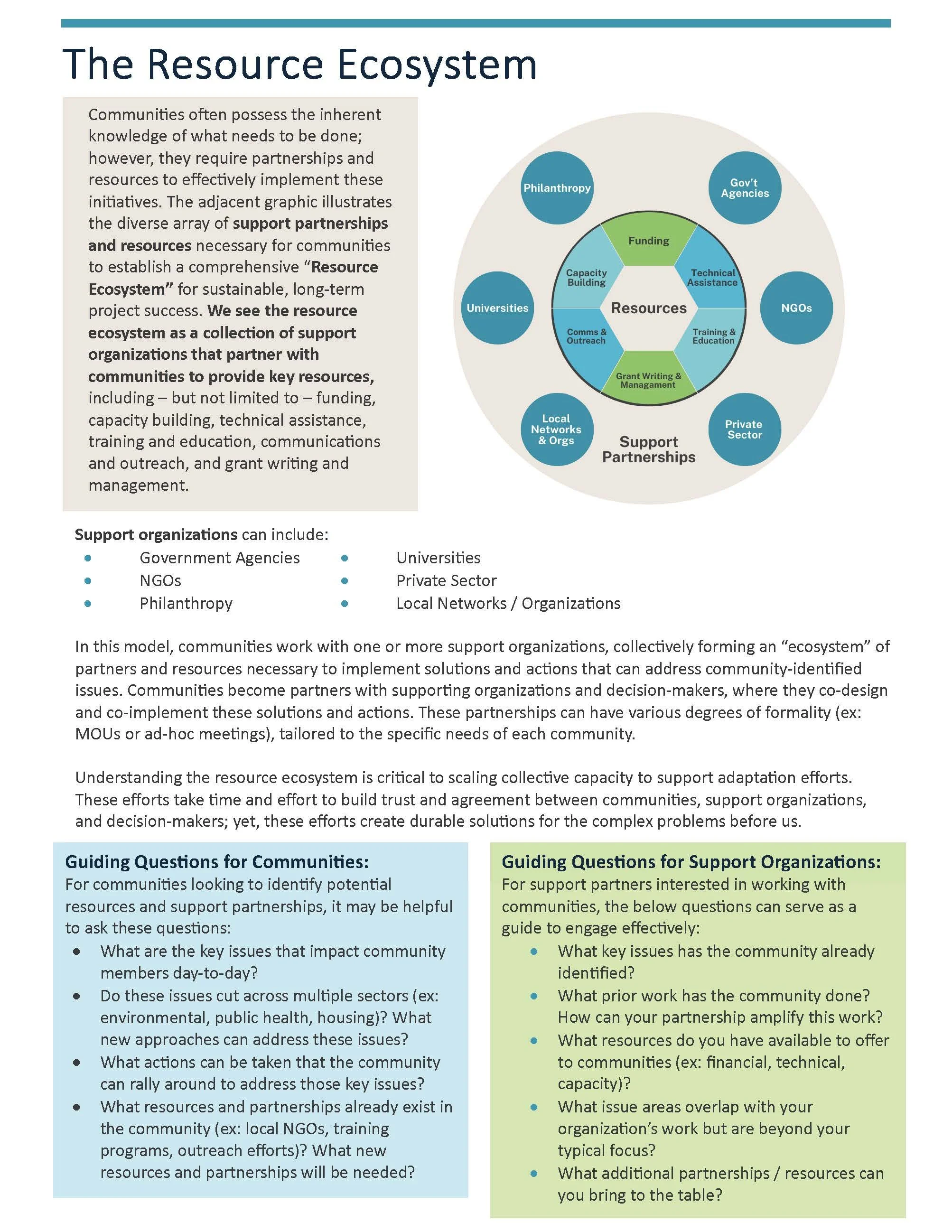
Learn more about the Resource Ecosystem framework →